Orthodox Review of Spirituality and Theology
Orthodox Review of Spirituality and Theology
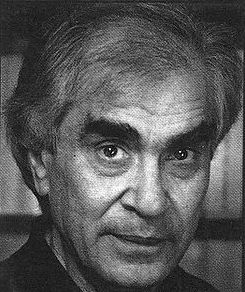
Christos Yannaras
Christos Yannaras. Greek Orthodox philosopher and theologian, professor emeritus at the Panteion University of Social and Political Sciences in Athens, he is the author of numerous works on the meaning of the Orthodox tradition and its relationship with modernity.
Published articles (14)
Our journey toward true freedomThis article by the Greek philosopher and theologian Christos Yannaras, professor emeritus at the University of Political Sciences in Athens, addresses the notion of freedom considered from an Orthodox theological perspective. Drawing on philosophical and spiritual reflection, it distinguishes the common conception of freedom, reduced to individual autonomy, from its authentic meaning as understood by the ecclesial tradition. The central idea is that true freedom consists not in self-affirmation, but in the renunciation of the ego, which is the condition for an openness to divine grace and to relationship with others. The theological contribution of the article lies in its emphasis on the ecclesial dimension of ascesis: the personal effort of man, a fundamentally relational being, is not fulfilled in solitude, but takes place within the common life of the Church as a communal event.
Read the article → The orthodox approach to human loveThis article is the transcript of a paper by the Greek theologian and philosopher Christos Yannaras, presented at a conference in Saint-Laurent-sur-Sèvre. The author develops a reflection on the nature of love from the perspective of Orthodox theology. The central idea is the distinction between love as a natural impulse and love as a mode of existence, in the image of the Trinitarian God. Yannaras shows that the Johannine definition "God is Love" grounds an ontology of the person that is irreducible to any sentimental or individualistic morality. Drawing on the Church Fathers, particularly Saint Maximus the Confessor, he articulates eros and agape, apophaticism and pastoral care, obedience and freedom. The major theological contribution lies in the critique of the confusion between natural love and ecclesial love, illustrated through a rereading of the sacrament of marriage and spiritual direction practices.
Read the article → For a new ecumenismThis article by Christos Yannaras, a transcript of a paper delivered in Rome in 1996, offers a critical reflection on contemporary ecumenism and argues for its radical renewal. The author contends that the ecumenism of the 1960s, centered on mutual knowledge of confessions and social or ideological debates, missed the essential point: the question of victory over death. He advocates for an ecumenism grounded in personal and existential encounter between believers who share the same thirst for true life. Articulating his thought around the notions of freedom and knowledge, Yannaras reinterprets them through the patristic tradition and Orthodox personalist anthropology, in opposition to modern individualism. The theological contribution of the article lies in the interconnection of ecclesiology, asceticism, and personal ontology as foundations for authentic Christian dialogue.
Read the article → Christos Yannaras speaks with Constantin SigovThis article takes the form of an interview between the Greek philosopher Christos Yannaras and the Ukrainian philosopher Constantin Sigov, both of Orthodox tradition. The conversation, conducted in French, explores the relationships between language, philosophy and theology starting from the question of words and their weight of experience. Yannaras develops a reflection on the origins of philosophy in the Greek tradition, the notion of *pneuma*, Athenian democracy as an ethical model, and the relationship between time and eternity drawing on Saint Maximus the Confessor. The theological contribution of this exchange lies in the articulation between personalist ontology, apophaticism inherited from Heraclitus and living ecclesial experience, where the Church Fathers — Isaac the Syrian, Maximus the Confessor, Gregory Palamas — are presented as contemporary interlocutors rather than distant historical references.
Read the article → Orthodoxy: Archaeological Vestige or Testimony of the Essential?This article by Christos Yannaras, drawn from a lecture delivered in Marseille in 1992 on the occasion of the Sunday of Orthodoxy, examines the authentic meaning of Orthodoxy in the face of its contemporary ideological reductions. The author adopts a meditative and argumentative approach, articulating philosophical reflection, biblical exegesis and reference to the Church Fathers. The central idea is that Orthodoxy cannot be reduced to a fixed doctrinal system or to ideological fanaticism: it designates a mode of existence founded on personal relationship and love, in the image of Trinitarian life. By drawing on patristic figures — Isaac the Syrian, Athanasius, Gregory Palamas, Maximus the Confessor — as well as Gospel parables, Yannaras shows that faith is relational trust, that the Church is a place of existential transformation, and that the question of death receives an answer in the deification of man through the divine energies. The theological contribution lies in the reformulation of Orthodoxy as an ontology of communion, distinct from any individualistic morality or pietist religiosity.
Read the article → Science and Faith the "logical" vision of the worldThis article by Christos Yannaras, translated by Michel Stavrou and excerpted from his work *The ABC of Faith*, offers a theological study articulating scientific epistemology and a patristic vision of the world. Starting from the observation that modern science, despite its advances, reveals the relative nature of all knowledge — notably through Einstein, Heisenberg and quantum physics — Yannaras shows that the energetic constitution of matter, as described by Gregory of Nyssa and Maximus the Confessor, converges with the conclusions of contemporary physics. The central idea is that matter is a concurrence of created *logoi*, revealing the personal presence of the divine Logos. Knowledge of the world thus becomes "dia-logical": the human *logos* encounters the divine *logos* inscribed in creation. The theological contribution lies in the reactivation of the patristic notion of "contemplation of nature" as an indirect path toward personal knowledge of God.
Read the article → The Institution of the Pentarchy TodayThis article by Christos Yannaras, taken from his work *Truth and Unity of the Church* (1977), examines the contemporary relevance of the institution of the Pentarchy of Patriarchates for the unity of the Orthodox Church. The author develops a theological and ecclesiological reflection by distinguishing the hierarchical structure as an ecclesial *mode of existence* from any administrative or nationalist absolutization. The central idea is that the Pentarchy does not constitute an abstract, fixed principle, but the historical flesh of a liturgical and conciliar *mode* of defining truth, as illustrated by the seven Ecumenical Councils. The contribution of the article lies in the articulation between catholic Hellenism, the responsibility of the Ecumenical Patriarchate of Constantinople, and the transcendence of nationalist autocephalies, proposing an ecclesiology of Trinitarian communion as the foundation of Orthodox unity in the face of contemporary crises.
Read the article → Vladimir Lossky: a landmark, a starting pointThis article by Christos Yannaras offers a theological and historical assessment of Vladimir Lossky's work, twenty years after his death. Drawing on critical and synthetic reflection, it examines the significance of the *Essay on the Mystical Theology of the Eastern Church* as a pivotal work in the history of Orthodox theology. The central idea is that this book constitutes a historical landmark marking the end of the "Babylonian captivity" — a period of dependence on Western scholastic methods — and the beginning of a return to patristic theology, grounded in the experience of salvation and ecclesial catholicity. On the theological level, Yannaras identifies three coordinates derived from Lossky's work — the ontology of the person, apophatic gnoseology, and eucharistic ecclesiology — as structuring axes of contemporary Orthodox thought, whose influence has extended to the Roman Catholic patristic renewal and the Second Vatican Council.
Read the article → The Church in a changing world Communication by Christos YannarasThis article by Christos Yannaras examines the relationship of the Orthodox Church to the contemporary secularized world. Drawing on systematic theological reflection, it raises the question of the proper ecclesial positioning in the face of secularization: neither sectarian withdrawal nor submission to the world. The central idea is that the Church, as the living body of Christ, has a vocation to transform individuals into persons, according to the Trinitarian model of existence as a communion of love. This transformation is accomplished within the eucharistic reality and through ascesis. The theological contribution lies in the distinction between individual existence and personal existence, applied to three contemporary debates — consumerism, baptism, and the ordination of women — to demonstrate the fundamental incompatibility between ecclesial logic and the individualistic presuppositions of secularized modernity.
Read the article → Chronicle Read the article → Chronicle Read the article → Studies in political theologyThis article presents excerpts from the collection *Studies in Political Theology* (Athens, 1976) by Christos Yannaras, a Greek Orthodox theologian whose texts appear regularly in the Athenian daily *To Vima*. The approach combines theological essay and engaged commentary. The introduction offers a critique of Western "political theology," deemed captive to an oscillation between abstract transcendence and secular commitment, and sets against it an Orthodox conception grounded in the Trinitarian model: authentic politics aims at the communion of persons, not merely the rational regulation of rights. The two chronicles extend this reflection: one analyzes the collapse of modern forms of universality — Roman, Catholic, Marxist — as a symptom of a deep civilizational crisis; the other examines the risks of a Europeanization of Greece that would erase a spiritual heritage irreducible to consumer society. The overall contribution is to articulate, from within the Orthodox tradition, a theological and political alternative to Western humanism.
Read the article → The Sign of JonasThis article by Christos Yannaras offers an exegetical and symbolic meditation on the biblical narrative of Jonah, read as an archetype of the human condition before God. The approach is both literary and theological: Yannaras interprets Jonah's flight as a universal figure of human estrangement from God, whose insurmountable limits paradoxically reveal the divine presence. The central idea is that the "sign of Jonah," as mentioned in the Gospel, prefigures Christ's descent into hell on Holy Saturday: God follows man to the ultimate depths of his revolt in order to bring about the Resurrection there. The theological contribution lies in the articulation between anthropology and Christology: only a God "commensurate with the human abyss" can transform flight into encounter, a theme illustrated by the Byzantine iconographic tradition of the Anastasis.
Read the article → The ear of MalchusThis article by Christos Yannaras offers a theological meditation based on a specific Gospel episode: Peter's gesture of cutting off Malchus's ear during the arrest of Jesus at Gethsemane. The approach is one of spiritual and ecclesiological reflection, structured around a recurring image that runs throughout the text. The central idea is that Peter's gesture — attempting to save Christ by human means — illustrates a fundamental misunderstanding of the Paschal mystery: death as the condition of resurrection. Yannaras extends this figure to the history of the Church and to personal life, denouncing every form of apologetics, legalism, or ecclesial activism that would claim to bypass the logic of the Cross. The theological contribution lies in a rereading of ecclesial weakness as the locus of divine power, drawing on Isaac the Syrian and Photius.
Read the article →