Orthodox Review of Spirituality and Theology
Orthodox Review of Spirituality and Theology
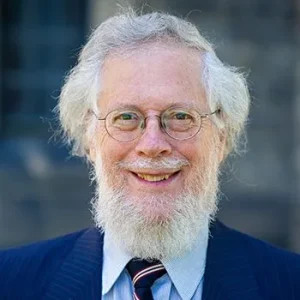
Paul Ladouceur
Paul Ladouceur (1944-2025) was a Canadian theologian who taught at the Orthodox School of Theology at Trinity College (University of Toronto) and at the Faculty of Theology and Religious Studies at Université Laval (Quebec). He published French translations of writings by Saint Maria of Paris (*Le Jour du Saint-Esprit*, éd. du Cerf, Paris, 2011), and by Father Lev Gillet (*Le Pasteur de nos âmes*, YMCA Press/De Guibert, Paris, 2008).
Published articles (11)
The ordination of women to the priesthood a theological question or a pastoral question?This article by Paul Ladouceur, a Canadian Orthodox theologian, addresses the question of the ordination of women to the priesthood in the Orthodox Church. Proceeding through a critical and systematic study, the author reviews the main arguments advanced since the 1960s both against — ritual impurity, natural hierarchy, the iconic argument, difference of charisms, the absence of women among the apostles, canonical tradition — and in favor of such ordination — ontological equality, universality of salvation, gifts of the Spirit, royal priesthood. The central idea is that these theological debates, having become repetitive and sterile, have produced no decisive argument in either direction. The main contribution of the article lies in the shift of perspective it proposes: the question of the ordination of women should henceforth be treated not as a theological problem, but as a pastoral question, evaluated in light of the concrete missionary needs of the contemporary Orthodox Church.
Read the article → Ecumenical commitment or anti-ecumenism? A decisive debate within the Orthodox ChurchThis article offers an in-depth study of the phenomenon of anti-ecumenism within the contemporary Orthodox world. Paul Ladouceur examines the historical and theological origins of this exclusivist stance, which regards the Orthodox Church as the sole custodian of salvation. The author analyzes the various current manifestations of this movement and sets out its doctrinal foundations. The article highlights the tensions running through the Orthodox world on the question of relations with other Christian confessions. Beyond the diagnosis, the theologian examines the conditions for a renewed reflection on ecclesial unity and its practical implications. This contribution offers a well-documented perspective on a major debate in contemporary Orthodox ecclesiology, enabling readers to understand the theological and ecclesial issues underlying the internal divisions within Orthodoxy in the face of ecumenical engagement.
Read the article → Georges Florovsky and the renewal of Orthodox theology: an unprecedented conferenceThis article focuses on Georges Florovsky's contribution to the renewal of Orthodox theology in the twentieth century. It takes the form of a lecture delivered by Florovsky in 1968 at the University of Aix-en-Provence, during a philosophy colloquium, accompanied by an introduction by Paul Ladouceur. The main idea developed by Florovsky concerns the necessity of a return to patristic sources as the foundation of an authentic Orthodox theological renewal, in critical dialogue with Western philosophical and intellectual modernity. From a theological and historical standpoint, this text constitutes a document of primary importance for understanding the thought of one of the most influential Orthodox theologians of the last century, particularly his conception of "neopatrism" as a path for the regeneration of Orthodox theology in the face of contemporary challenges.
Read the article → Neo-traditionalist ecclesiology in OrthodoxyThis article examines the ecclesiological tensions within contemporary Orthodoxy, particularly in the context of ecumenical dialogue. Paul Ladouceur adopts an analytical and critical approach to study the neo-traditionalist current, characterized by a radical anti-ecumenism that refuses to recognize any sacramental validity in other Christian Churches. The main idea is that this position presents deep theological inconsistencies, particularly with regard to the question of the salvation of non-Orthodox Christians. In response, the author defends a mysteriological and apophatic ecclesiology, according to which the boundaries of the Church remain known to God alone and cannot be defined exclusively by human criteria. The theological contribution of the article lies in highlighting the limitations of Orthodox neo-traditionalism and in proposing a more open and theologically coherent ecclesiological alternative.
Read the article → “Let us love one another”: Sergius Bulgakov and Georges FlorovskyThis historical study examines the intellectual and personal relationship between two major figures of twentieth-century Orthodox theology, Sergius Bulgakov (1871-1944) and Georges Florovsky (1893-1979), both professors at the Saint Sergius Institute in Paris during the interwar period. Drawing on extensive documentation, Paul Ladouceur traces over a period of some twenty years the tensions and convergences between the promoter of sophiology and the father of the neo-patristic synthesis. The article highlights the role of Russian diaspora networks, in particular the Saint Sophia brotherhood and the Saint Photius brotherhood, in supporting and structuring these theological debates. The main contribution of the study is to show that, despite profound doctrinal differences, Bulgakov and Florovsky maintained genuinely fraternal relations, thus illustrating the capacity of Orthodox theological dialogue to combine intellectual disagreement with personal communion.
Read the article → Inventaire des sources en vue d’une biographie complète de sainte Marie de Paris [EN] Read the article → Quelques énigmes de la biographie de sainte Marie de Paris [EN] Read the article → Thought and work of Élisabeth Behr-Sigel Read the article → The “dialogue with Trypho” of Father Lev GilletThis article by Paul Ladouceur examines Father Lev Gillet's (1893-1980) engagement in Jewish-Christian dialogue, through a historical and theological study centered on his work *Communion in the Messiah* (London, 1942). The article first traces the biographical context: Lev Gillet's collaboration with Reverend Paul Levertoff in London from 1938 onwards, in a shelter for Jewish refugees fleeing Nazism. It then analyzes the structure and arguments of *Communion in the Messiah*, a work that seeks to establish theological, spiritual, and messianic convergences between Judaism and Christianity, particularly around the themes of the Shekinah and eschatological hope. The article's main contribution is to show how this book, praised for its erudition and depth, constitutes a pioneering contribution to interreligious dialogue, whose relevance remains intact, as evidenced by its reissues in 1999 and 2003.
Read the article → Christianity and reincarnationThis article by Paul Ladouceur examines the compatibility between belief in reincarnation and the Christian faith. Adopting a systematic theological and historical approach, the author first analyzes the origins of reincarnation in Eastern and ancient Greek traditions, as well as its contemporary spread in the West. He then demonstrates that no text in the New Testament supports this doctrine: the passages frequently invoked, notably those relating to John the Baptist and Elijah or to being born "from above," can be explained without recourse to reincarnation. An examination of the Church Fathers confirms their unanimous opposition to metempsychosis. On the doctrinal level, the article establishes that reincarnation is fundamentally incompatible with the Christian notions of personhood, freedom, resurrection, and salvation through Christ. The main contribution of the study is to show that any attempt to reconcile reincarnation and Christianity inevitably leads to an irreversible distortion of the anthropological and soteriological foundations of the Christian faith.
Read the article → The experience and idea of death in Saint Maria of ParisThis article by Paul Ladouceur examines the central place of death in the life and thought of Saint Maria of Paris (Elisabeth Skobtsova, 1891–1945), a Russian Orthodox émigré nun who died in the Ravensbrück concentration camp. Drawing on both biographical study and theological reflection, it traces the successive experiences of grief that marked her journey — the deaths of her father, her brother, her two daughters, and finally her son — and analyzes how each contributed to her spiritual maturation. The central argument is that Saint Maria moved from a revolt against God, provoked by the absurdity of death, to a paschal faith that "abolishes death," in her own words. The theological contribution of the article lies in the articulation between the Orthodox ascetic tradition of the "remembrance of death" and a radical existential experience, of which the essay "Birth and Death" constitutes both its doctrinal and personal synthesis.
Read the article →